
MOHS Surgery in Huntington Beach, CA
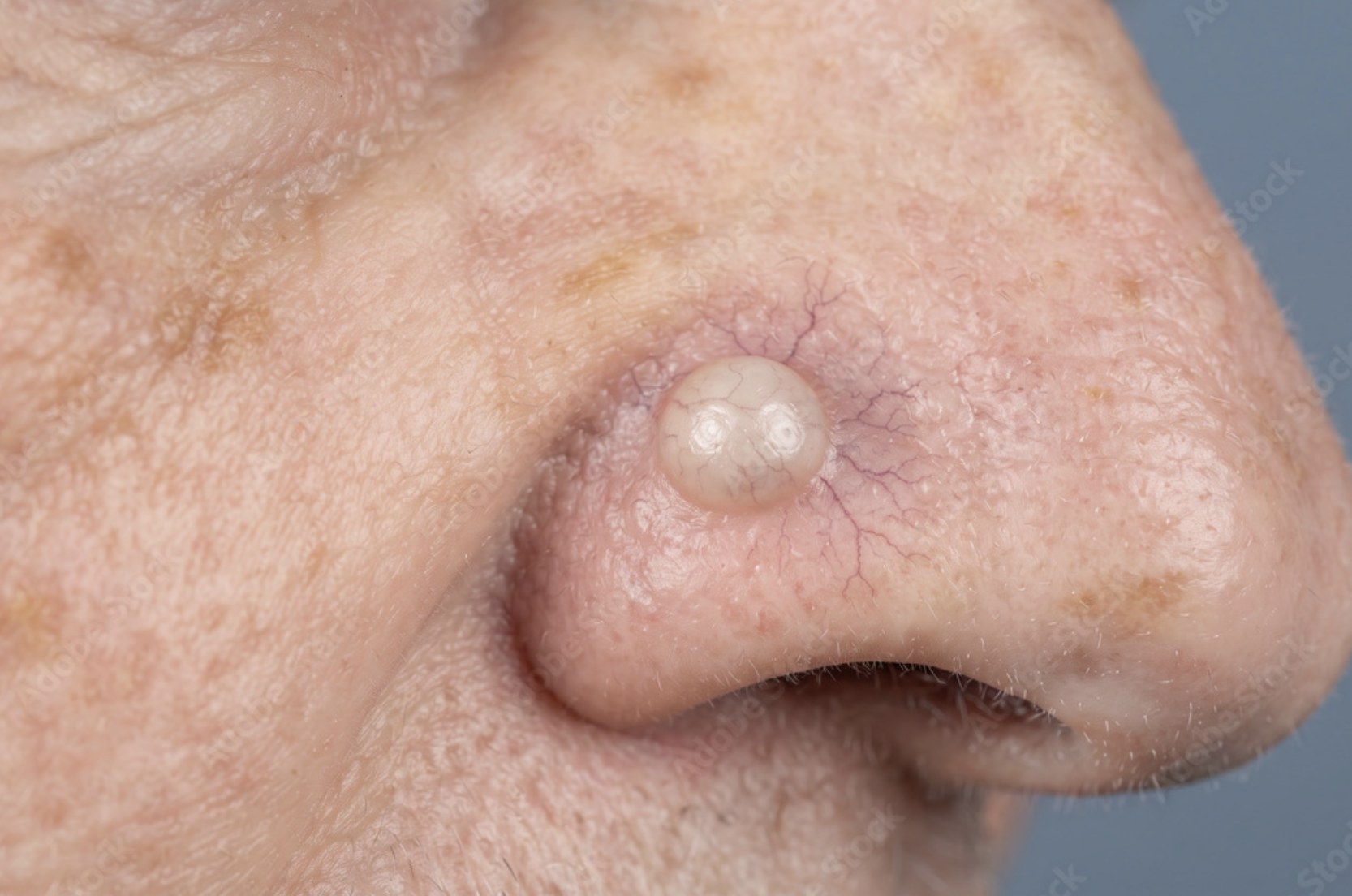
A unique technique that is used to remove skin cancer, Mohs surgery has one of the highest success rates for removing more difficult basal cell carcinomas. At Z-Dermatology & Skin Wellness Center in Huntington Beach, California, Mohs surgery is performed by Dennis Nguyen, MD, FAAD, a board-certified dermatologist and ACMS fellowship-trained Mohs surgeon.
Patients come to our Huntington Beach office from across Orange County, including Fountain Valley, Costa Mesa, Newport Beach, Westminster and Seal Beach. Schedule online or call (714) 951-9119 to discuss whether Mohs is right for your skin cancer.
- Setting
- In-office, outpatient
- Anesthesia
- Local injection — you stay awake
- Plan for
- Several hours, most of it waiting
- Margins
- Read under the microscope during your visit
What is Mohs surgery?
Mohs micrographic surgery removes skin cancer one thin layer at a time. After each layer comes off, the surgeon examines the entire outer edge and undersurface of that tissue under a microscope while you wait. If any cancer cells remain, the surgeon maps exactly where they are and removes another small layer from that spot only — not from the whole area.
That is what sets Mohs apart from a standard excision. In a standard excision, the tissue is sent to an outside lab and only a sample of the margin is checked, days later. In Mohs, essentially 100 percent of the margin is examined during the appointment, and the surgeon who removes the tissue is the same person who reads the slides.
Because only tissue that still contains cancer is taken, healthy skin around the tumor is preserved. That matters most on the face, where every millimeter counts cosmetically and functionally.
When is Mohs surgery recommended?
Mohs is not needed for every skin cancer. It is generally reserved for tumors that are higher risk, harder to define, or in areas where sparing healthy tissue is important, including:
- Cancers on the nose, eyelids, lips, ears, hands, feet, or genitals
- Cancers on the face, scalp, neck, or shins
- Large tumors, or tumors with borders that are difficult to see
- Cancers that have come back after previous treatment
- Cancers that were not completely removed the first time
- Tumors arising in scar tissue or previously irradiated skin
- Skin cancer in patients who are immunosuppressed, including transplant recipients
Most often that means basal cell carcinoma and squamous cell carcinoma. Your dermatologist will review your biopsy results with you and explain why Mohs is or is not the right approach for your particular tumor.
What happens on the day of surgery?
Mohs is an outpatient procedure done in the office under local anesthetic. You are awake the entire time, and only the area being treated is numbed.
- The surgeon examines the site, marks the area to be treated, and numbs it with an injection of local anesthetic.
- The visible tumor is removed, along with a thin layer of surrounding tissue.
- That tissue is divided, color-coded, and mapped so its exact orientation on your skin is recorded.
- The surgeon examines the edges and undersurface of every section under the microscope.
- If cancer cells remain, the surgeon returns to the precise spot on the map and removes one more thin layer — only from there.
- Steps three through five repeat until no cancer is seen at the margins. Then the surgeon discusses how best to repair the wound.
Plan on being at the office for several hours. Most of that time is spent waiting while the tissue is processed and read, not in the procedure room, so bring something to read and wear comfortable clothes. How many layers a tumor takes cannot be known in advance — some clear in one, others take several.
How is the wound repaired?
Once the cancer is clear, the surgeon knows the exact size and shape of the wound and can plan the repair around it. Depending on where the wound sits and how large it is, that may mean stitching it closed directly, using a skin flap or graft, or in some cases letting it heal on its own. The options and the expected cosmetic result are discussed with you before anything is done.
What should I expect while I heal?
You will go home with a bandage and written wound-care instructions covering when to change the dressing, how to clean the site, and when it is safe to return to exercise or wear makeup. Some soreness, swelling, bruising, or minor bleeding in the first few days is normal.
A follow-up visit is scheduled to remove stitches and check healing. A scar is expected — any treatment that removes skin cancer leaves one — and it typically flattens and fades over the following months, with full maturation taking up to a year.
Because anyone who has had one skin cancer is at higher risk for another, ongoing full-body skin checks are part of your care after surgery.
Why fellowship training matters
A Mohs surgeon acts as surgeon, pathologist, and reconstructive surgeon in a single appointment. Fellows accepted through the American College of Mohs Surgery complete at least one additional year of training beyond dermatology residency, dedicated to those three roles. Dr. Nguyen is ACMS fellowship-trained and board certified by the American Board of Dermatology.
Call Z-Dermatology & Skin Wellness Center or schedule online to have a suspicious spot evaluated, or for a second opinion on a skin cancer that has already been biopsied.
Related services
We look forward to meeting you.
Send Us a Message
-
Visit Us
18800 Main Street, Suite 111
Huntington Beach, CA 92648 -
Call Us
(714) 951-9119 -
Office Hours
Monday – Thursday 8:00 AM – 5:00 PM Friday 8:00 AM – 4:00 PM Saturday – Sunday Closed